Skip to content

Mobile apps people come back to.

Revryn is a mobile app studio. We start with the problem your app has to solve, build it in React Native or fully native in Kotlin and Swift, and stay with it after launch.

Start a project
The layers Revryn designs and builds, from the interface down to infrastructure.
  1. Interface
  2. Product logic
  3. APIs and integrations
  4. Data
  5. Infrastructure

Where we come in

We’re most useful at three moments.

  1. When an app needs to exist.
  2. When it has outgrown the way it was built.
  3. When the roadmap needs more hands than the team has.

Work

Selected work

A selection of apps for iOS and Android.

Converse

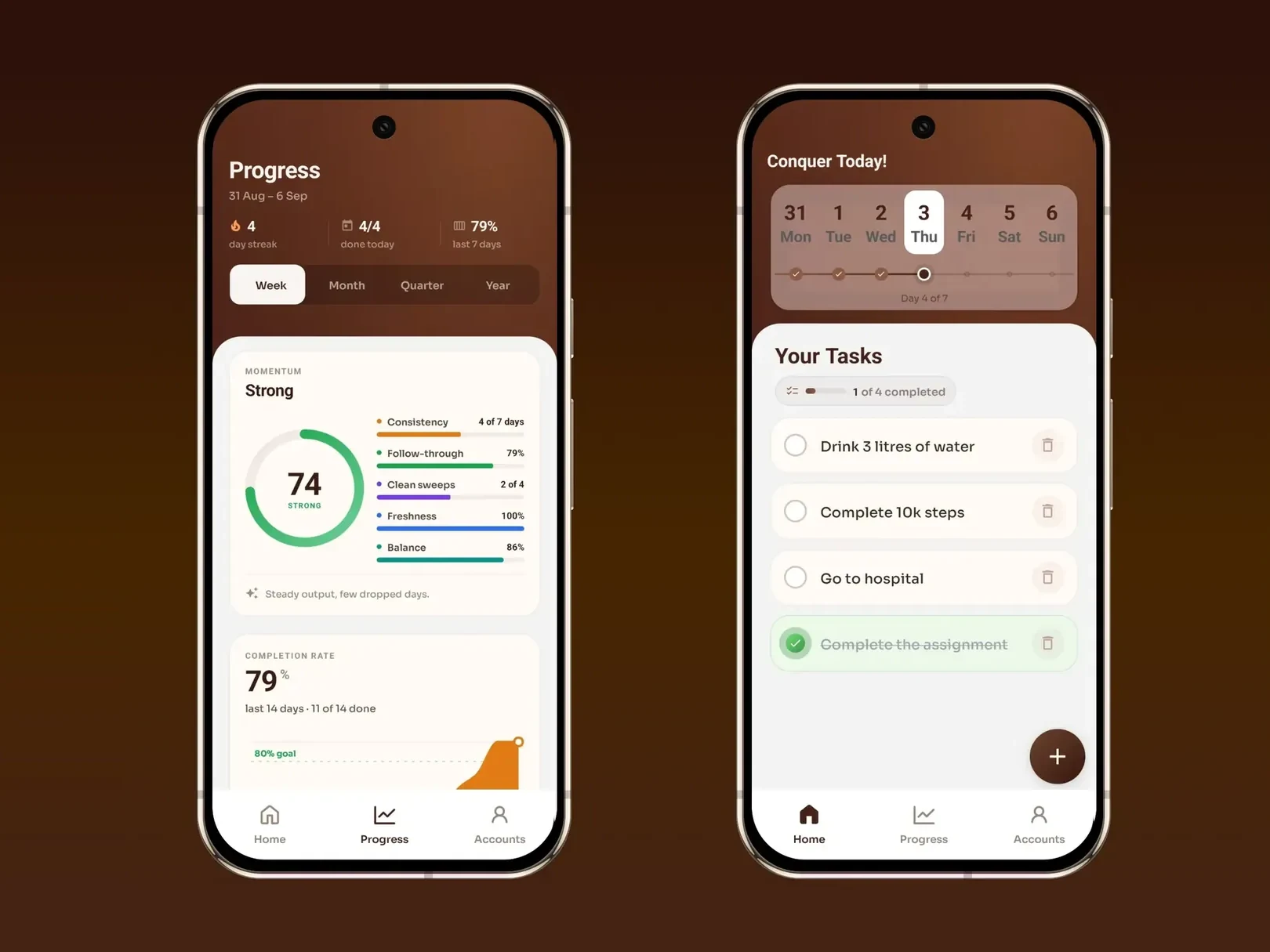
Live voice rooms of four for speaking practice, in a new language or your own. Rooms are matched by language and level, from beginner to advanced, with occupancy that updates in real time and a weekly count of minutes spoken.

Category
Web and mobile application
Stack
Next.js, React Native, Fastify
Year
2026

Snipr

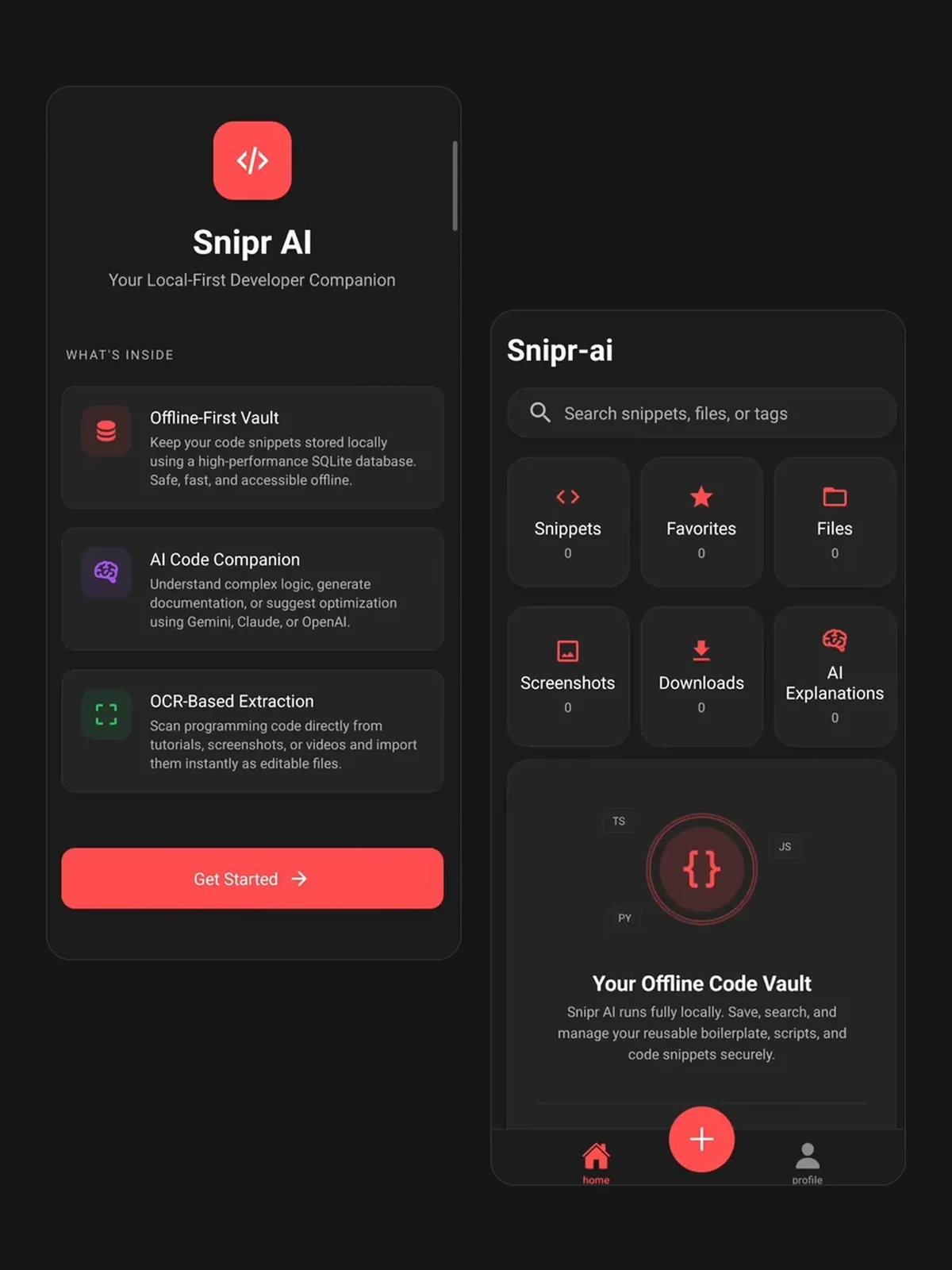
An offline code snippet vault for iOS and Android, built on an on-device SQLite database. It reads code out of screenshots and explains or improves snippets with the developer’s own Gemini, Claude or OpenAI key, kept encrypted on the phone.

Mobile application React Native, Expo, SQLite

Clients

In their words

“We always knew where the project stood. Deadlines were met without us having to chase anyone.”

Suraj VermaOwner, Zed Productions

Services

Mobile apps, from first screen to store

React Native first. Fully native in Kotlin or Swift when the app calls for it, and one team for the design, the app and the backend behind it.

Stack

What we build with

Every choice comes down to how it behaves in production: speed, failure modes, and how easy it is to hand over.

  1. Interface

    React Native

    Our default. One TypeScript codebase for iOS and Android that still feels native on both, with Expo handling builds, over-the-air updates and store releases.

    Android

    Kotlin and Jetpack Compose when an app needs to be fully native on Android, or when a React Native app needs a native module.

    iOS

    Swift and SwiftUI when an app needs to be fully native on iOS, or when it has to reach deeper into the platform than React Native allows.

  2. Product logic and APIs

    Backend

    The APIs your app talks to, in TypeScript on Node.js. One language from the screen to the server, so types and logic are shared, not rewritten.

    AI

    Generative and applied AI inside the app: writing and summaries, search that understands meaning, reading photos and documents. Agents that act through your APIs when an app calls for them. Keys stay on the server, never in the app.

  3. Data

    Databases

    SQLite on the device so apps keep working offline. PostgreSQL or MongoDB on the server, depending on the shape of the data.

Approach

How a project runs

Five stages, in order. Each one ends with something you can see and check.

  1. 01

    Understand

    We start with the problem, not the feature list. Who uses it, what exists today, and what success looks like.

    OutputA written brief both sides agree on

  2. 02

    Define

    We shape the product before building it. Flows, key screens and a technical plan, checked with real users where we can.

    OutputPrototype and architecture outline

  3. 03

    Build

    Short cycles with a working build at the end of each one, installed on your own phone.

    OutputTest builds, reviewed as they’re made

  4. 04

    Refine

    Testing, performance, accessibility and edge cases. The unglamorous work that decides whether an app holds up.

    OutputAn app ready for store review

  5. 05

    Ship

    Launch is a handover, not an exit. Store releases, crash monitoring, documentation and support after release.

    OutputA live app your team can own

About

We’d rather build it right than build it twice.

Most apps don’t fail loudly. They get slower to change, harder to trust and more expensive to run.

We work to prevent that from the first week. That means understanding the problem before writing code, keeping systems simple enough to change, and caring about the details people only notice when they’re missing. We want long-term work with teams who care how their product is built, not only how it looks.

  • Clear over clever

    Code, interfaces and decisions should be easy for the next person to follow.

  • Less, but finished

    Fewer features that work completely beat many that almost do.

  • Built to hand over

    Documented, tested and readable. You should never be locked in to us.

  • Straight answers

    If something is a bad idea, a risk or running late, you hear it early.

Questions

Before you hire an app team

  • What does Revryn do?

    Revryn is a mobile app studio. We design and build apps for iOS and Android, mainly in React Native with Expo and TypeScript, and fully native in Kotlin or Swift when an app needs it. We also build the backend behind the app and add AI features, then keep the app running after launch.

  • Should my app use React Native or native Kotlin and Swift?

    Most apps should start with React Native: one codebase ships to both stores, so every feature reaches iOS and Android users at the same time and there is one app to maintain, not two. Native Kotlin or Swift is the better choice when an app is for one platform only, needs deep hardware or background access, or depends on features like widgets and Live Activities. We’ll tell you which we’d pick for your app and why.

  • Why choose Revryn over a cheaper team?

    Because a cheap app is rarely cheap for long. It shows up later as crashes, slow screens, a rewrite, or code nobody else can work on. Revryn competes on the quality of the work, not the price. We start by understanding the problem and who the app is for, push back on features that don’t serve it, test on real devices before every release, and build so the app stays easy to change. One team covers the design, the app and the backend, so nothing is lost in handoffs.

  • Do you work with clients outside India?

    Yes. Revryn is a remote team based in India, and we work with clients in the United States, the United Kingdom, Canada, Australia, Europe and the UAE. We plan calls around your time zone and share test builds you can install on your own phone as the work happens.

  • How much does it cost to build an app?

    We don’t aim to be the cheapest option. We price for an app that is built properly: understood before it’s coded, tested on real devices and easy to keep changing. The cost depends on the screens, the integrations and the backend, so after a short call about the problem you’re solving, we send a written proposal with scope, timeline and cost before any work starts.

  • Who owns the code?

    You do. The code, the designs, the store listings and the accounts are yours from the start. Everything is documented and readable, so your own team or another studio can take over at any time.

  • Do you publish the app to the App Store and Google Play?

    Yes. We handle signing, store listings, review and staged releases on both stores, and set up crash monitoring so problems show up before reviews do.

  • Can you add AI features to an app?

    Yes. We build generative and applied AI features such as assistants that know the user’s data, smarter search, and reading photos and documents, using models like Claude and Gemini. API keys stay on the server, never in the app.

  • Do you maintain apps after launch?

    Yes. We stay on after launch for updates to new iOS and Android versions, fixes, monitoring and new features, for as long as you want us to.

Contact

Have an app in mind?

Start with just an idea, a sketch or a finished design. We’ll take it from there.

  1. First name is fine.
  2. We only use it to answer you.
  3. Where are you starting from?Pick the closest. Any starting point works.
  4. A few lines is enough to start.

0 of 4 done. Next: add your name

Email
[email protected]
Call
+91 93116 79390

After you send

  1. 1You see a confirmationRight here, as soon as it sends.
  2. 2We read it and replyBy email, with questions or a time to talk.
  3. 3A short callAbout the problem first, then scope, timing and cost.